In today’s fast-paced digital landscape, businesses are turning to ERP integration services to streamline operations, boost efficiency, and gain real-time insights. Discover how these powerful solutions can transform your organization from the ground up.
What Are ERP Integration Services?

Enterprise Resource Planning (ERP) integration services refer to the process of connecting an ERP system with other business applications, databases, and platforms to ensure seamless data flow across departments. This integration eliminates data silos, reduces manual entry, and enhances decision-making by providing a unified view of business operations.



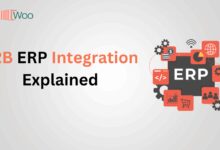

Defining ERP Integration
At its core, ERP integration involves linking your ERP software—such as SAP, Oracle, Microsoft Dynamics, or NetSuite—with third-party systems like CRM, HRM, e-commerce platforms, supply chain tools, and financial applications. The goal is to create a cohesive ecosystem where data moves automatically and accurately between systems.
- ERP integration bridges gaps between departments like finance, sales, inventory, and HR.
- It supports both real-time and batch data synchronization.
- Integration can be one-way (e.g., pushing data from ERP to CRM) or bi-directional (two-way sync).
“ERP integration is not just about connecting systems—it’s about aligning business processes for maximum efficiency.” — Gartner Research
Types of ERP Integration
There are several models of ERP integration, each suited to different business needs and technical environments:
- Point-to-Point Integration: Direct connections between two systems. Simple but hard to scale.
- Middleware Integration: Uses integration platforms (like MuleSoft or Dell Boomi) as a bridge between systems.
- API-Based Integration: Leverages RESTful or SOAP APIs for flexible, modern connectivity.
- Cloud-to-Cloud Integration: Connects cloud-based ERP with other SaaS applications.
- On-Premise to Cloud Integration: Links legacy on-site ERP systems with modern cloud tools.
Choosing the right type depends on your infrastructure, scalability needs, and long-term digital strategy. For example, MuleSoft’s Anypoint Platform is widely used for API-led ERP integrations due to its flexibility and enterprise-grade security.
Why ERP Integration Services Are Essential for Modern Businesses
In an era where data drives decisions, ERP integration services are no longer optional—they’re a strategic necessity. Companies that fail to integrate their systems risk inefficiency, data inaccuracies, and missed growth opportunities.
Breaking Down Data Silos
One of the biggest challenges in mid-sized and large organizations is the existence of data silos. Sales might use one platform, finance another, and inventory a third—each operating independently. This leads to conflicting reports, duplicated efforts, and delayed responses.
ERP integration services dismantle these silos by ensuring that every department accesses the same data in real time. When a sales order is placed in Salesforce, it automatically updates inventory levels in the ERP and triggers an invoice in the accounting module. This synchronization reduces errors and accelerates workflows.
Improving Operational Efficiency
Manual data entry is not only time-consuming but also prone to errors. Studies show that up to 30% of data entered manually contains mistakes. ERP integration automates these processes, eliminating redundant tasks.
- Automated purchase orders based on inventory thresholds.
- Sales forecasts updated in real time from CRM data.
- Payroll processing synced with HR and time-tracking systems.
According to a report by IBM, companies that implement ERP integration see a 25% reduction in operational costs within the first year.
Top 7 Benefits of ERP Integration Services
The advantages of investing in ERP integration services extend far beyond simple connectivity. From enhanced reporting to improved customer satisfaction, the benefits are transformative.
1. Real-Time Data Access and Reporting
With integrated systems, decision-makers can access live dashboards that reflect current business conditions. Whether it’s tracking sales performance, monitoring inventory turnover, or analyzing cash flow, real-time data empowers leaders to act quickly and confidently.
For example, a manufacturing company using ERP integration can instantly see if a supplier delay will impact production schedules and adjust procurement strategies accordingly.
2. Enhanced Customer Experience
When customer data from CRM systems is synchronized with ERP, service teams have a complete view of the customer journey. They can see order history, payment status, support tickets, and preferences—all in one place.
- Faster response times to customer inquiries.
- Personalized marketing and upselling opportunities.
- Accurate delivery and invoicing timelines.
This holistic view leads to higher customer satisfaction and loyalty. A study by Salesforce found that 80% of customers consider the experience a company provides as important as its products or services.
3. Scalability and Future-Proofing
As businesses grow, they often adopt new tools and platforms. ERP integration services make it easier to scale by allowing new applications to plug into the existing ecosystem without disrupting operations.
For instance, an e-commerce business expanding into new markets can integrate localized payment gateways, tax calculators, and shipping providers into its ERP without overhauling the entire system.
“Scalability isn’t just about growth—it’s about agility in the face of change.” — McKinsey & Company
4. Regulatory Compliance and Audit Readiness
Industries like healthcare, finance, and manufacturing are subject to strict regulatory requirements. ERP integration ensures that data is consistent, traceable, and securely stored across systems.
- Automated audit trails for financial transactions.
- Compliance with GDPR, HIPAA, SOX, and other standards.
- Centralized documentation and reporting for regulators.
This reduces the risk of non-compliance penalties and simplifies the audit process.
5. Cost Savings and ROI
While ERP integration requires an initial investment, the long-term return on investment (ROI) is substantial. Automation reduces labor costs, minimizes errors, and prevents revenue leakage.
A retail chain that integrated its POS system with its ERP reported a 40% reduction in stockouts and a 15% increase in sales due to better inventory visibility.
6. Improved Supply Chain Visibility
ERP integration services connect procurement, logistics, warehousing, and supplier networks into a single, transparent system. This end-to-end visibility allows companies to anticipate disruptions, optimize inventory, and improve delivery times.
- Real-time tracking of goods from supplier to customer.
- Automated reordering based on demand forecasting.
- Supplier performance analytics integrated into procurement workflows.
According to Gartner, organizations with integrated supply chains experience 20% faster order fulfillment cycles.
7. Empowering Digital Transformation
ERP integration is a cornerstone of digital transformation. It enables the adoption of advanced technologies like AI, machine learning, and IoT by providing clean, unified data.
For example, predictive analytics tools can forecast equipment failures in manufacturing when ERP data is combined with IoT sensor inputs. This proactive maintenance reduces downtime and extends asset life.
Common ERP Integration Challenges and How to Overcome Them
Despite the benefits, ERP integration services come with challenges. Understanding these hurdles and how to navigate them is crucial for a successful implementation.
Data Quality and Consistency Issues
Poor data quality is one of the leading causes of integration failure. Duplicate records, inconsistent naming conventions, and outdated information can corrupt the integrated system.
Solution: Conduct a data audit before integration. Cleanse, standardize, and validate data across all systems. Use master data management (MDM) tools to maintain consistency post-integration.
Legacy System Compatibility
Many organizations still rely on outdated ERP systems that lack modern APIs or cloud connectivity. Integrating these with newer applications can be technically complex.
Solution: Use middleware or integration platforms that support legacy protocols. Consider a phased migration strategy—integrate first, then modernize.
“Legacy systems don’t have to be a roadblock—they can be a bridge to the future with the right integration approach.” — TechCrunch
Change Management and User Adoption
Employees may resist new integrated systems due to fear of change or lack of training. Poor adoption can undermine the benefits of ERP integration.
Solution: Involve stakeholders early in the process. Provide comprehensive training and highlight how the integration improves their daily work. Use change management frameworks like ADKAR (Awareness, Desire, Knowledge, Ability, Reinforcement).
ERP Integration Services: Key Technologies and Tools
The success of ERP integration depends heavily on the tools and technologies used. Here are some of the most effective platforms and methods in use today.
Integration Platforms as a Service (iPaaS)
iPaaS solutions like MuleSoft Anypoint Platform, Dell Boomi, and Google Apigee provide cloud-based environments for building, deploying, and managing integrations.
- Support hundreds of pre-built connectors for popular ERP and SaaS apps.
- Offer drag-and-drop interface for non-technical users.
- Enable API management, monitoring, and security.
These platforms reduce development time and offer scalability for growing businesses.
Application Programming Interfaces (APIs)
Modern ERP systems expose APIs that allow secure, programmatic access to data and functions. REST APIs are particularly popular due to their simplicity and compatibility with web standards.
For example, NetSuite provides a comprehensive REST and SOAP API suite that enables developers to integrate with e-commerce, CRM, and analytics tools.
Best practices include versioning APIs, implementing rate limiting, and using OAuth for authentication.
Enterprise Service Bus (ESB)
An ESB acts as a central communication backbone for enterprise applications. It routes messages, transforms data formats, and manages service orchestration.
erp integration services – Erp integration services menjadi aspek penting yang dibahas di sini.
- Ideal for large organizations with complex integration needs.
- Supports high-volume, mission-critical transactions.
- Examples include IBM Integration Bus and Apache ServiceMix.
While powerful, ESBs require specialized skills and can be costly to maintain.
How to Choose the Right ERP Integration Services Provider
Selecting the right partner is critical to the success of your ERP integration project. Not all providers offer the same level of expertise, support, or scalability.
Assess Technical Expertise and Experience
Look for a provider with proven experience in your industry and with your specific ERP system. Ask for case studies, client references, and certifications.
- Do they have certified developers for SAP, Oracle, or Microsoft Dynamics?
- Have they handled integrations of similar complexity?
- Can they demonstrate success in your sector (e.g., manufacturing, retail, healthcare)?
For example, a provider with experience in integrating SAP S/4HANA with Salesforce will be better equipped than a generalist.
Evaluate Support and Maintenance Offerings
Integration doesn’t end at go-live. Ongoing support, monitoring, and updates are essential.
- Does the provider offer 24/7 support?
- Do they provide proactive monitoring and alerting?
- Is there a clear SLA (Service Level Agreement) for response times?
Ensure they offer post-implementation services like performance tuning and troubleshooting.
Consider Scalability and Future-Proofing
Your integration solution should grow with your business. Ask how the provider handles new system additions, increased data volume, and technology upgrades.
Do they use modular, API-led architectures that make future integrations easier? A forward-thinking approach ensures your investment remains valuable for years.
ERP Integration Services in Action: Real-World Use Cases
Understanding how ERP integration services work in practice can help businesses visualize the impact. Here are three real-world examples across different industries.
Manufacturing: Streamlining Production and Inventory
A mid-sized automotive parts manufacturer struggled with overstocking and production delays due to disconnected systems. Their ERP, MES (Manufacturing Execution System), and supplier portal operated in isolation.
By implementing ERP integration services, they connected these systems, enabling real-time visibility into raw material availability, production schedules, and quality control data.
Results:
- 30% reduction in inventory carrying costs.
- 25% improvement in on-time delivery.
- Automated purchase orders reduced procurement cycle time by 50%.
Retail: Unifying E-commerce and Back-Office Operations
An online fashion retailer used Shopify for sales, QuickBooks for accounting, and a standalone inventory system. This led to frequent stockouts and order fulfillment errors.
They partnered with an ERP integration services provider to connect Shopify with their new NetSuite ERP system.
Results:
- Real-time inventory sync across all sales channels.
- Automated order processing reduced fulfillment time from 48 to 12 hours.
- Improved financial reporting accuracy by 95%.
Healthcare: Enhancing Patient Care and Billing Accuracy
A regional hospital network used separate systems for patient records (EMR), billing, and supply chain management. This caused billing delays and medication stock issues.
ERP integration services linked their Oracle ERP with the EMR and pharmacy systems, enabling seamless data flow.
Results:
- Reduced billing errors by 60%.
- Improved medication availability by synchronizing inventory with patient treatment plans.
- Enhanced compliance with HIPAA through centralized audit logs.
The Future of ERP Integration Services
As technology evolves, so do ERP integration services. Emerging trends are shaping the next generation of connected enterprise systems.
AI and Machine Learning in Integration
Artificial intelligence is being used to automate mapping, detect anomalies, and predict integration failures. AI-powered tools can learn from past data flows and suggest optimal integration paths.
For example, AI can identify that a particular field in CRM should map to a specific account in the ERP based on historical patterns.
Low-Code and No-Code Integration Platforms
Platforms like Microsoft Power Automate and Zapier are making ERP integration accessible to non-developers. Business users can create simple workflows without writing code.
While not suitable for complex enterprise integrations, these tools empower departments to solve small-scale integration problems quickly.
Event-Driven Architecture (EDA)
Instead of polling systems for changes, event-driven integration reacts to real-time events (e.g., “order placed,” “inventory low”). This model improves responsiveness and reduces system load.
Modern ERP systems are increasingly adopting EDA principles, especially in cloud environments.
What’s Next? The convergence of ERP integration with IoT, blockchain, and edge computing will enable even more intelligent, autonomous business operations.
What are ERP integration services?
ERP integration services involve connecting an Enterprise Resource Planning (ERP) system with other business applications—such as CRM, HR, e-commerce, and supply chain tools—to enable seamless data exchange and process automation across the organization.
What are the main benefits of ERP integration?
The key benefits include real-time data access, improved operational efficiency, enhanced customer experience, cost savings, better compliance, and support for digital transformation. Integrated systems reduce manual work, minimize errors, and provide a unified view of business performance.
How long does ERP integration take?
The timeline varies based on complexity, but most mid-sized business integrations take 3 to 6 months. Factors include the number of systems involved, data quality, customization needs, and the integration method used (e.g., iPaaS vs. custom coding).
Can ERP integration work with legacy systems?
Yes, ERP integration can work with legacy systems using middleware, API wrappers, or integration platforms that support older protocols. While more complex, it’s entirely feasible and often a stepping stone to full digital transformation.
Is cloud ERP integration secure?
Yes, when done correctly. Cloud ERP integration uses encryption, OAuth authentication, and secure API gateways to protect data. Reputable integration platforms comply with standards like ISO 27001, SOC 2, and GDPR.
ERP integration services are a powerful enabler of business efficiency, agility, and growth. By connecting disparate systems into a unified ecosystem, organizations gain real-time insights, reduce operational costs, and improve customer satisfaction. While challenges exist—such as data quality and legacy compatibility—these can be overcome with the right strategy and partner. As technology advances, the future of ERP integration is even more promising, with AI, low-code platforms, and event-driven architectures paving the way for smarter, more responsive enterprises. Investing in ERP integration today is not just about fixing inefficiencies—it’s about building a future-ready business.
erp integration services – Erp integration services menjadi aspek penting yang dibahas di sini.
Further Reading: